Modern cities are often associated with traffic congestion, pollution, crowded roads, and constant vehicle noise. However, some places around the world have chosen a very different approach by limiting or completely banning cars from daily life. The concept of cities with no cars world has gained significant global attention because these communities demonstrate how urban spaces can function efficiently without depending heavily on private vehicles. Instead of highways and traffic jams, these cities prioritize walking, cycling, public transportation, and sustainable lifestyles.
The rise of environmental concerns and overcrowded urban areas has increased interest in car free cities as models for healthier and more sustainable living. Architects, environmentalists, and governments increasingly study these urban spaces to understand how better urban planning can improve public health, reduce pollution, and create more livable communities. These unique cities offer valuable lessons about the future of transportation and modern urban development.
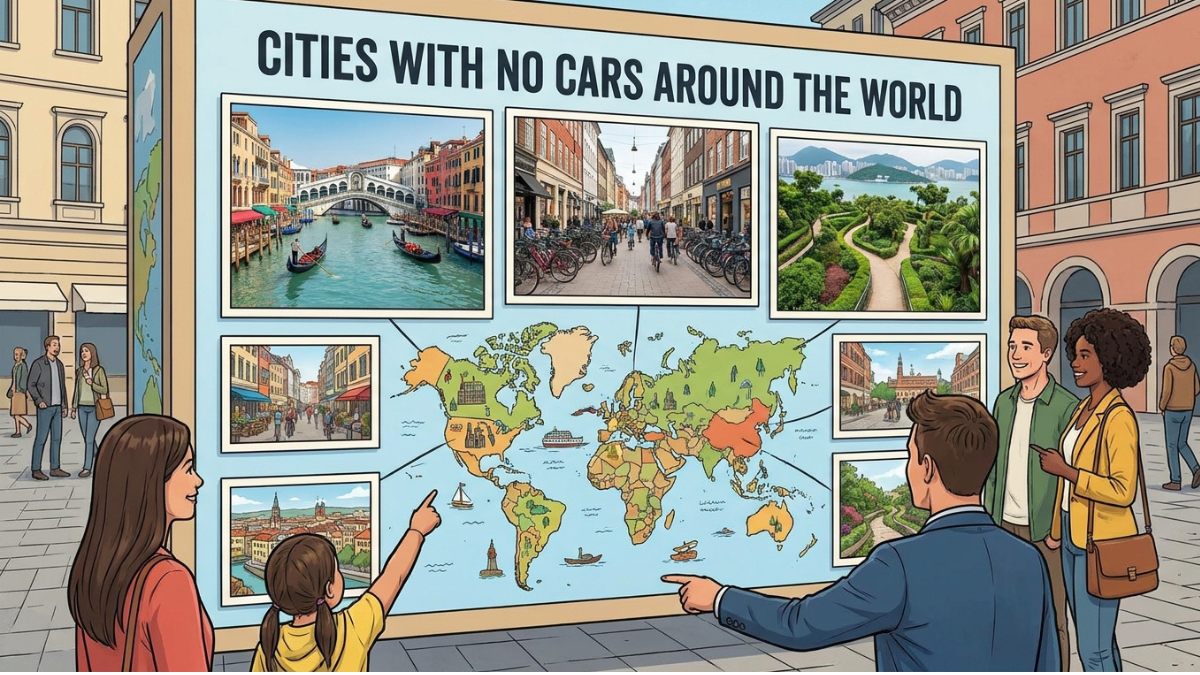
Why Some Cities Ban Cars
The main reason cities with no cars world exist is because many governments and urban planners want to reduce pollution, noise, traffic accidents, and overcrowding. Large cities often struggle with severe air pollution caused by millions of vehicles operating daily.
By creating car free cities, authorities encourage residents and visitors to rely on cleaner transportation options such as bicycles, trains, walking paths, and electric transit systems. This shift improves air quality and makes public spaces more enjoyable for pedestrians.
Several goals connected to modern urban planning include:
- Reducing carbon emissions
- Improving public health
- Lowering traffic congestion
- Increasing green public spaces
- Encouraging active lifestyles
- Preserving historical city centers
Some older cities also developed before automobiles existed, making narrow streets unsuitable for modern traffic. In these locations, limiting vehicle access helps preserve architectural heritage while improving pedestrian safety.
As climate change and environmental concerns become more urgent globally, many cities are now considering stronger transportation restrictions and sustainable mobility solutions.
Famous Car Free Cities Around the World
Several famous car free cities have become global examples of sustainable transportation and innovative city design. These places show how urban communities can thrive without relying heavily on personal vehicles.
Venice in Italy is one of the best-known examples among discussions about cities with no cars world. Instead of roads, the city uses canals and boats for transportation. Narrow walking streets and bridges connect neighborhoods throughout the historic city.
Other notable car free cities include:
- Giethoorn in the Netherlands
- Fes el Bali in Morocco
- Hydra Island in Greece
- Mackinac Island in the United States
- Zermatt in Switzerland
Each of these places uses unique forms of urban planning adapted to local geography, history, and environmental goals. In Zermatt, gasoline-powered vehicles are banned to protect air quality near the Swiss Alps. Residents primarily use electric vehicles, bicycles, and horse-drawn carriages.
These cities continue attracting tourists interested in peaceful environments, clean air, and traditional transportation systems rarely seen in modern urban areas.
Table of Cities With No Cars Around the World
| City | Country | Main Transportation Method | Reason for Car Restrictions |
|---|---|---|---|
| Venice | Italy | Boats and walking | Historic canal city |
| Giethoorn | Netherlands | Boats and bicycles | Water-based village design |
| Hydra Island | Greece | Walking and donkeys | Preservation of traditional lifestyle |
| Zermatt | Switzerland | Electric vehicles and trains | Environmental protection |
| Mackinac Island | USA | Bicycles and horse carriages | Historic preservation |
| Fes el Bali | Morocco | Walking and carts | Ancient narrow streets |
These examples of cities with no cars world demonstrate how transportation systems can function successfully without heavy automobile dependence.
The success of these car free cities has inspired urban planners worldwide to rethink transportation infrastructure and environmental sustainability.
Benefits of Car Free Cities
Many researchers believe car free cities offer major social, environmental, and health benefits compared to heavily vehicle-dependent urban areas. Reduced car traffic creates quieter neighborhoods, cleaner air, and safer streets for pedestrians and cyclists.
Several advantages connected to cities with no cars world include:
- Lower air pollution
- Reduced greenhouse gas emissions
- Less traffic noise
- Improved public safety
- Healthier walking and cycling lifestyles
- More public green spaces
Effective urban planning also allows cities to use land more efficiently. Instead of large parking lots and wide highways, car-free communities can create parks, pedestrian areas, public markets, and recreational spaces.
Studies show residents in walkable cities often experience lower stress levels and stronger social interaction because public spaces become more community-focused rather than vehicle-centered.
Tourism also benefits in many car-free areas because visitors enjoy peaceful environments and scenic streets without heavy traffic congestion.
Urban Planning and Sustainable Transportation
Modern urban planning plays a critical role in developing successful car free cities. Removing cars alone is not enough; cities must also provide efficient alternatives for transportation and daily services.
Planners designing cities with no cars world often focus on:
- Reliable public transportation
- Safe cycling infrastructure
- Walkable neighborhoods
- Mixed-use development
- Green public spaces
- Smart traffic management systems
Some modern cities now use “15-minute city” concepts where residents can access schools, shops, healthcare, and workplaces within short walking or cycling distances.
Public transportation systems such as electric buses, trams, metro networks, and water taxis help support mobility in these urban environments.
Many governments believe sustainable urban planning is essential for managing future population growth while reducing environmental damage and transportation-related pollution.
Challenges Faced by Car Free Cities
Despite their advantages, car free cities also face several practical and economic challenges. Delivering goods, managing emergency services, and supporting elderly or disabled residents can become more complicated without standard vehicle access.
Some common challenges include:
- Transportation of heavy goods
- Emergency response accessibility
- Tourist overcrowding
- Limited mobility during bad weather
- Infrastructure maintenance costs
Modern urban planning must carefully balance sustainability with accessibility and economic practicality. Some cities partially restrict vehicles rather than banning them completely to maintain flexibility.
Rapid urban growth also creates pressure on public transportation systems within cities with no cars world. Overcrowding can occur if infrastructure does not expand alongside population increases.
Additionally, many residents in car-dependent societies may resist major transportation changes because private vehicles are often associated with convenience and personal freedom.
Technology and the Future of Car Free Cities
Technology is helping modern car free cities become more efficient and practical. Electric public transportation, autonomous vehicles, smart traffic systems, and sustainable infrastructure are transforming how urban mobility operates.
Several technologies influencing future urban planning include:
- Electric buses and trains
- Shared bicycle systems
- Autonomous delivery robots
- Smart pedestrian traffic systems
- Renewable energy transportation networks
Many governments now invest heavily in sustainable transportation projects to reduce carbon emissions and improve city life.
Experts predict more cities with no cars world may emerge in coming decades as climate concerns, fuel costs, and urban overcrowding continue increasing globally.
Some large metropolitan areas are already experimenting with low-emission zones, pedestrian-only districts, and expanded cycling infrastructure inspired by successful car-free models.
Why Car Free Cities Attract Tourists
Tourists are increasingly drawn to car free cities because they offer calm, scenic, and environmentally friendly travel experiences. Walking through historic streets without traffic noise allows visitors to appreciate architecture, local culture, and natural beauty more comfortably.
Several reasons tourists enjoy cities with no cars world include:
- Cleaner and quieter environments
- Safer pedestrian experiences
- Scenic transportation methods
- Relaxed atmosphere
- Better photography opportunities
Many travelers also view these destinations as examples of sustainable living and innovative urban planning for the future.
The unique atmosphere created by reduced traffic often becomes a major attraction itself, especially for visitors from heavily congested cities.
Conclusion
The growing popularity of cities with no cars world demonstrates how transportation systems and urban lifestyles can evolve toward more sustainable and people-centered environments. Through smart urban planning, these communities reduce pollution, improve public health, and create more enjoyable living spaces.
As environmental concerns continue shaping modern development, car free cities provide valuable examples of how future urban areas may balance mobility, sustainability, and quality of life. Their success proves that cities do not always need heavy automobile dependence to remain vibrant, efficient, and economically successful.
FAQ
What are cities with no cars world?
These are cities or communities where private vehicle use is heavily restricted or completely banned.
Why are car free cities becoming popular?
Car free cities help reduce pollution, improve public health, and create safer, quieter urban environments.
How do people travel in car free cities?
Residents and visitors use walking, bicycles, boats, trains, electric vehicles, and public transportation systems.
What is the role of urban planning in car free cities?
Urban planning designs transportation systems, walkable neighborhoods, and sustainable infrastructure to support daily life without heavy car use.
Which is the most famous car free city?
Venice in Italy is one of the world’s most famous examples of a city operating without cars.
Click here to learn more